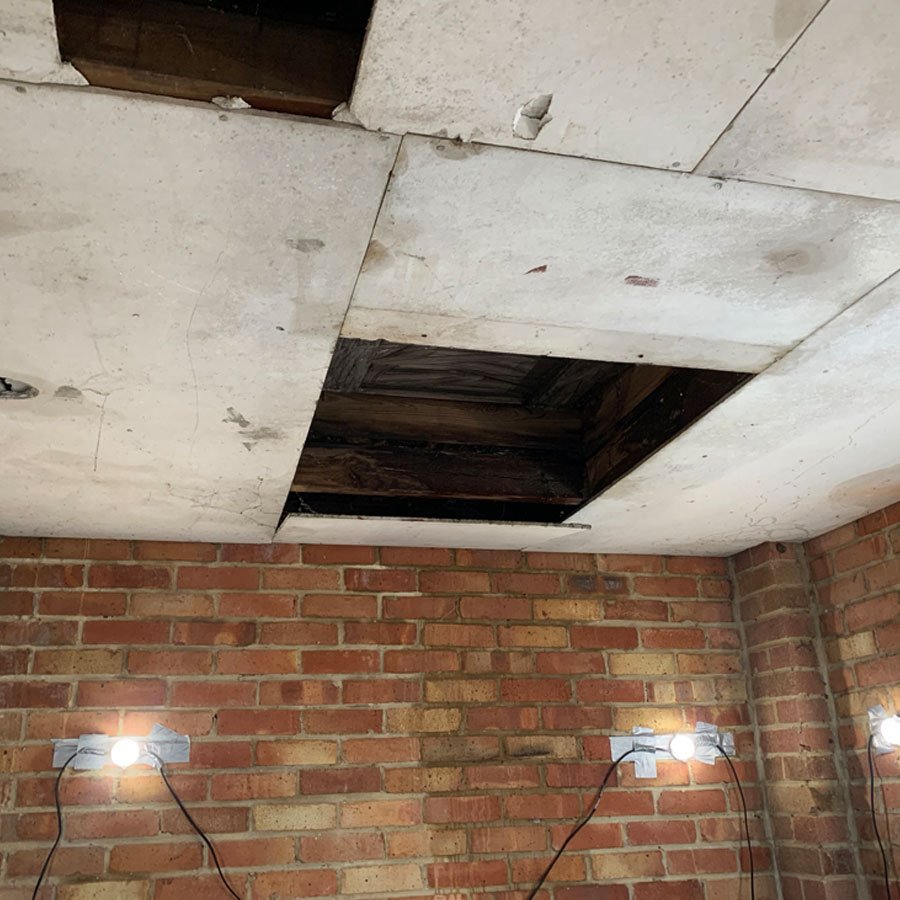
Where AIB turns up
- Ceiling tiles and partition walls
- Soffits, fascias and porch panels
- Boiler and cupboard linings
- Fire doors, fire breaks and service ducts
- Behind walls and above suspended ceilings
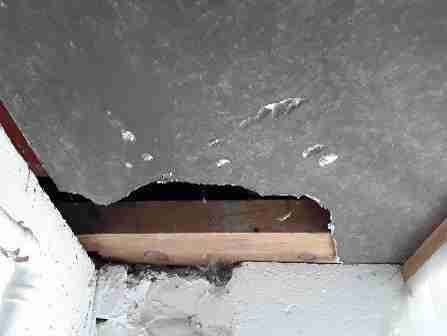
You cannot identify AIB by eye
AIB looks very similar to modern boards and some cement products. Age is a clue, because it was common until 1985 and used into the 1990s, but only a laboratory result is reliable. We do not start AIB work without one.
Reinstatement
Once the area has been certified clean, we can put things back together: replacement boards, plastering, ceilings and decoration, through our own team or trusted partners.
How we do the work
Plan and notify
A detailed plan of work is prepared and the job is notified to the HSE before licensed work begins.
Build the enclosure
An airtight enclosure is built around the area, fitted with air locks and a negative pressure unit that filters extracted air through HEPA filters.
Set up decontamination
A three-stage decontamination unit gives the team a controlled place to shower and change.
Remove by hand
Boards are wetted and removed with hand tools, intact where possible. Power tools are avoided.
Clean and bag
Surfaces are vacuumed with HEPA equipment and wet-wiped, and waste is double-bagged and sealed.
Test and certify
An independent analyst carries out a visual inspection and air testing before issuing a certificate for reoccupation.
Asbestos waste is double-bagged, sealed and taken by a registered carrier to an authorised disposal site. You receive a waste consignment note as your legal record.