
What makes a job licensable
- Exposure cannot be shown to stay below the control limit of 0.1 fibres per cm³ averaged over four hours
- The work involves high-risk materials such as lagging, sprayed coatings or insulation board
- The job is not short-duration, small-scale work
- A licensed contractor is needed for the risk level
Where there is doubt, the work is treated as licensed until a competent person confirms otherwise.
Licensing in practice
The HSE issues licences to asbestos removal contractors and inspects them, often without warning. Licensed contractors must be assessed for competence, training, equipment and management systems, and licences are renewed at intervals. Always ask a contractor to show their licence.
Paperwork you should expect
- Notification to the HSE at least 14 days before work starts
- A written plan of work
- Risk assessments and method statements
- A waste consignment note
- A clearance certificate from an independent analyst
How we do the work
Notify the HSE
Licensed jobs must be notified to the HSE at least 14 days before work begins.
Plan and document
A plan of work covers methods, controls, emergency procedures and the site layout.
Provide decontamination
A decontamination unit with showers and clean and dirty zones sits next to the work area.
Seal the enclosure
A heavy polythene enclosure is built, often on a timber frame, with air locks.
Extract the air
Negative pressure units draw air through HEPA filters before discharge to the outside.
Remove, bag and certify
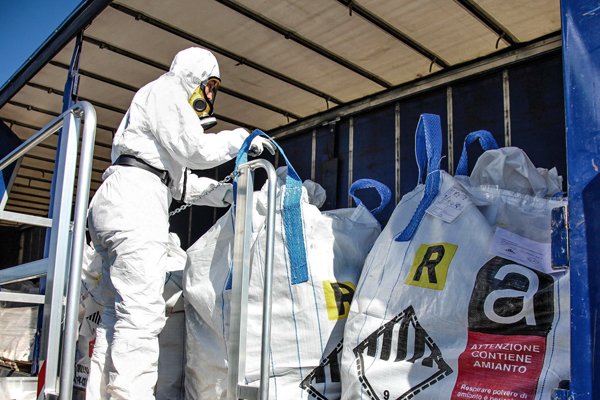
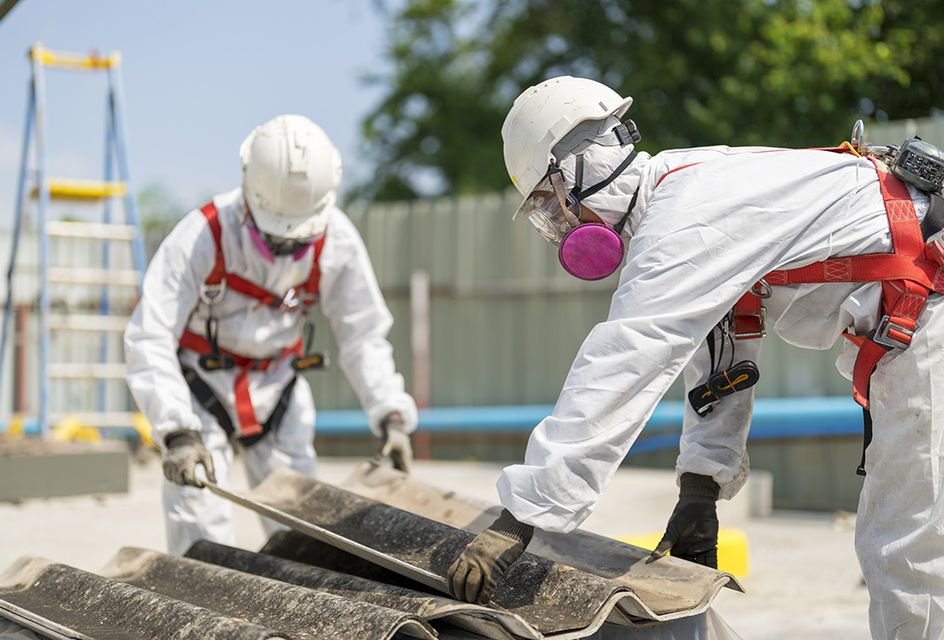
Trained operatives remove the material wearing tight-fitting respirators and disposable overalls. Waste is double-bagged and removed by a registered carrier, and an independent analyst clears the area.
Asbestos waste is double-bagged, sealed and taken by a registered carrier to an authorised disposal site. You receive a waste consignment note as your legal record.